


Foshan Azobina Household Products Co., Ltd. specializes in the production of sponges and related products and has a manufacturing factory in Foshan, China. We continue to grow and strive to meet users' fashion needs in the global home furnishing industry. As a well-established Chinese manufacturer and exporter, we successfully meet the needs of the global mattress home market.

Our Advantages
Rich Experience
Our team has more than 10 years of experience in the production and sales of home textile products. Azobina Fabrics and Exports has become a famous mattress manufacturer and exporter in China.
Reliable Product Quality
Our factory's facilities, technology, and performance standards are in line with international standards. We always have pre-production samples before mass production and will do a final inspection before shipment.
OEM and ODM Available
We can provide OEM and ODM services, customize logos, designs, sizes, packaging, etc. according to customer needs, and provide personalized business support.
Quick Respond to Market Needs
Low minimum order quantities and fast shipping of large quantities of in-stock products allow us to be more flexible with orders, shortening delivery times and saving our customers money.
-

Pediatrician Recommended Two Sided Universal Standard Baby Mattress For Crib
A standard crib mattress refers to a mattress that is designed to fit a standard-sized crib. Standard-sized cribs are the most common type of cribs used for infants and toddlers, and their mattresses
Add to Inquiry -
Best Quality Memory Foam Breathable Full Size Crib Mattress in Playpen
Best Quality Memory Foam Breathable Full Size Crib Mattress in PlaypenDual-sided Design: The best breathable crib mattress features a dual-sided design, with the firmer side tailored for infants to
Add to Inquiry -
Good Non-Toxic Firm Standard Crib Mattress for Toddler Bed
Good Non-Toxic Firm Standard Crib Mattress For Toddler BedDual-sided Baby Mattress: Our baby crib mattress features dual hardness, offering both support and comfort for children at various growth
Add to Inquiry -
Best Soft Waterproof Portable Crib Mattress for Normal Standard Floor Bed
Best Soft Waterproof Portable Crib Mattress For Normal Standard Floor BedGood Support: The best standard crib mattress is made of comfortable and firm 28D high-density foam. It provides good support
Add to Inquiry -
Foldable Washable Fiberglass-free Foam Crib Mattress for Pack and Play Compressed Into Carton Box
Foldable Washable Fiberglass-free Foam Crib Mattress For Pack And Play Compressed Into Carton BoxOur foam crib mattress features a multi-layer design to ensure your baby enjoys a superior night's
Add to Inquiry -
Pediatrician Recommended Two Sided Universal Standard Baby Mattress For Crib
Meticulously crafted for your child's safety and comfort, our crib mattress two sided features a dual-firmness design. The firm, flat, and supportive high-density foam side is tailored for infants'
Add to Inquiry -
Multifunctional Newborn Removable Portable Safest Baby Crib Mattress for Sale
Multifunctional Newborn Removable Portable Safest Baby Crib Mattress For SaleComfort to Sleep - Our pack and play mattress adopts high density foam which is soft and breathable, it helps to protect
Add to Inquiry -
Washable Bassinet Mini Baby Crib Mattress Pads Soft
Washable Bassinet Mini Baby Crib Mattress Pads SoftSUPERIOR CRIB SHEET: When you have a little baby, you might be worried about accidental leaks during sleep without waterproof crib sheets. You can
Add to Inquiry -
Good Memory Foam Portable Thicker Mini Mattress for Toddlers Pack and Play with Replacement Cover
Creating a Safe and Comfortable Bedding Products for Baby and Mothers.. Ensuring Comfort and Quality Sleep.. Every Stitch and Every Fabric was Carefully Chosen to Create a Good Sleeping Environment
Add to Inquiry -
OEM Factory Direct Supply Best Baby Crib Mattress Thickness for Baby Crib Bedding
Stage Dual Firmness - Dual-sided design crib mattress meet the needs of babies at different growth stages. The firm side is made of high density support foam provides the firm support suits for
Add to Inquiry -
Best Breathable Soft Pack and Play Waterproof Baby Crib Mattresses Pad
Best Breathable Soft Pack And Play Waterproof Baby Crib Mattresses PadPremium Material: Luxury 300GSM fabric, our waterproof crib mattress protector is made with two layers of soft flannel cotton
Add to Inquiry -
Breathable Soft High Density Foam Baby Pack N Play Crib Mattress Pad for Sale
Premium Comfort: Our Pack N Play Mattresses provide a soft and supportive surface for your little one to rest and play on. The eco-friendly bamboo cotton blend cover is gentle to the touch and offers
Add to Inquiry

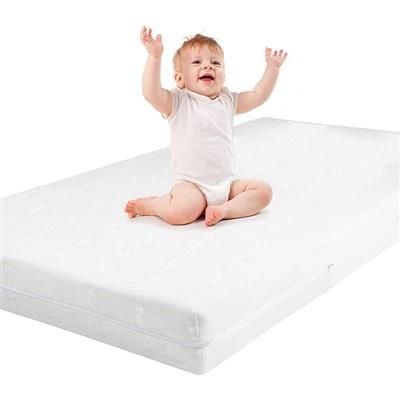


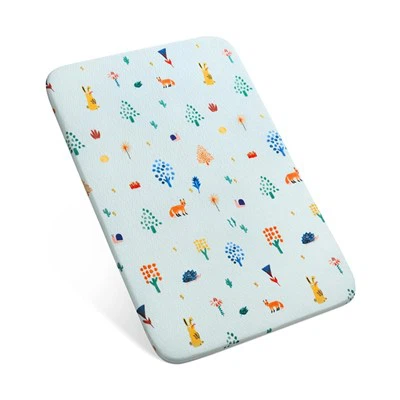


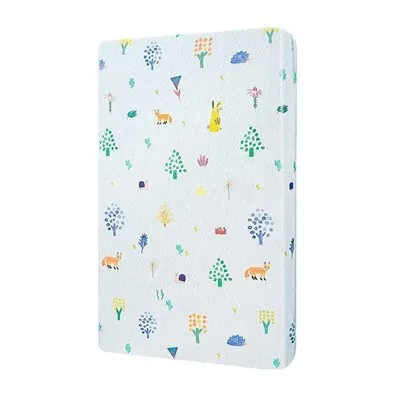
The standard full size crib mattress is a popular choice because it’s big and does not outgrow your baby very quickly. These rectangular crib mattresses are the perfect size for toddler beds as well.

Foam Mattresses
Foam mattresses are usually made from high-density polyurethane foam. At about 8 to 13 pounds, foam mattresses tend to be lighter than innerspring mattresses, which makes them easier to maneuver when changing the sheets or the crib mattress height. They tend to be less expensive than innerspring mattresses, ranging from about $40 to $400, but they can wear out more quickly, too—if the mattress begins to get softer and compress beneath the weight of your baby, it’s time to get a new one. This type of foam is different from memory foam, which is also known as “viscoelastic foam” and is designed to slowly conform to a shape that’s placed on it. (Remember, you don’t want your baby’s mattress to change shape when they’re placed on it! The mattress should remain firm.)
Innerspring Crib Mattresses
Innerspring crib mattresses contain steel coils that are surrounded by cotton or foam cushioning. They typically cost between $60 and $1,300 or more. They’re heavier, weighing between 10 and 20 pounds, and tend to be more durable than foam mattresses. Innerspring mattresses still outsell foam crib mattresses as their construction usually leads to a longer life.
You can judge the firmness and quality of an innerspring mattress by its coil count. Coils, aka springs, are made of steel and form the primary support in an innerspring mattress. They generally number from 80 to more than 200 coils per crib mattress. More coils, more support. This is important because babies need super firm, supportive mattresses—remember, it doesn’t need to be a mattress that you would find comfortable.
Steel gauge is another metric by which you can judge the firmness of a crib mattress. Steel gauge refers to the thickness of the coil springs. Lower numbers equal thicker gauge; a thicker steel gauge makes for a firmer mattress. Some nicer innerspring mattresses also have border rods, which are steel bars around the edges of the mattress for extra firmness around the edges.
Firmness and sizing are the two most important things to consider when making your purchase. The mattress shouldn’t indent when your baby lies on it, according to the AAP. And the mattress should fit nice and snugly into the crib, with no gaps.
Hybrid Mattresses
Hybrid mattresses are two-sided mattresses that can be used from the early days through toddlerhood. They’re also called two-stage, dual firm, or convertible crib mattresses. The infant side is firm, while the toddler side is a bit softer; however, according to the CPSC, both sides must be firm enough to be safe for a newborn; these mattresses typically come with guidance on when to flip them.
Measurement for a Standard Crib Mattress
Review Your Crib's Product Manual
Start here if you have your crib's product manual on-hand to reference. Most crib manuals should list compatible mattress sizes and types so you don't even need to take your own measurements. You can also determine compatible mattress sizes for your crib by going to the crib's product page and taking a look at the “You Might Also Need” section below the Add to Cart button.
Measure the Crib's Interior Length & Width
If you don’t have your product manual, or can't find compatible mattress information, don't worry! The crib mattress measurement process is quick and simple. Take a tape measure and place it on the inside of the crib. Measure across the interior of the long side of the crib to the other side to determine the correct mattress width. Then measure from the interior of the short panel on the end of the crib to the one directly across from it. This should measure the length of the crib and the length of the compatible mattress size.
Subtract a Half Inch from Your Measurements
As a general rule of thumb, there shouldn't be more than 1 inch of space between the crib and the crib mattress or more than two finger-lengths. Subtract a half inch from the total length and width of the crib to determine a good mattress size. This helps ensure that you can easily lift and lower the mattress into the crib, while also making sure the mattress fits snugly against all sides of the crib.

How to Clean Your Standard Crib Mattress?
Washing the Baby Bedding First!
It might seem like an unnecessary step, but washing your baby's bedding before you clean the mattress is a great way to start. You can throw everything in the washing machine and then leave it to dry before moving on to the mattress. It's a good idea to wash the sheets and covers regularly on a hot wash to kill any bacteria or dust mites that may be living on them. Your baby's bedding should be washed at least once a week, while the mattress can be washed once a month.
Vacuuming
There are two main reasons to vacuum your baby's mattress. First, it will help to pick up any loose dirt and debris that might be stuck in the fabric. And second, it will help to break up and remove any large stains that might be caked into the mattress.
Treating Stains
Stains are one of the biggest problems that you'll run into when cleaning your baby's mattress. Fortunately, you can work to treat those stains and get your mattress looking good as new. You'll just need to get out a baby-safe stain remover spray and a little scrub brush. For tough stains, you may need to spray the stain and let it sit for a few hours.
Scrubbing
When it comes to baby mattress cleaning, you will need to ensure you have a good scrubbing brush. Using a mild, hypoallergenic soap will help you gently scrub away any dirt and grime that has built up on the surface of your baby's mattress and leave it looking brand new!
Rinse Any Cleaner off
You want to make sure that any cleaning products are completely rinsed off the baby mattress before you put it back in the crib. If they are not, they could pose a health risk to your child and cause irritation to their delicate skin.
Sterilise Your Mattress
Once you've finished cleaning your mattress, you will need to sterilise it. This will get rid of any germs and bacteria that might be lingering in the fabric and will leave it as clean as new. You can sterilise your baby's mattress with a special mattress spray that's designed for this purpose. Sprays like these are specifically formulated to kill germs and bacteria without leaving behind any chemical smells or residues.
Air Drying
Most mattresses cannot go in a tumble dryer, which means it's important to let the mattress air dry before putting it back on the crib. Make sure to put the mattress on a surface that will allow air to circulate around it, like a clean and hard surface. You should ensure the mattress is completely dry before putting it back on the crib. This will help to prevent any problems with mould or other issues from arising.
Factors to Consider Before Choosing a Standard Crib Mattress
Designs
Though both kinds of mattresses—innerspring and foam—are considered safe, there are major differences in shopping for the two.
Weight
You’ll be changing the bed regularly—sometimes bleary-eyed in the middle of the night—so you should be able to pick up the mattress fairly easily. Any mattress that’s 10 to 20 pounds should be fine for you and baby.
Waterproof
Even if you plan on using a sheet saver and crib mattress pad— both smart ideas, since there are bound to be diaper blow-outs— you should also make sure your mattress is waterproof. Having that extra layer of protection means that accidents can’t seep inside the mattress.
Chemicals
Your kid is going to spending a lot of time on the mattress, so it makes sense to want safe materials against his or her skin. One certification to look for is GREENGUARD, which measures the chemical emissions from the mattress. If a mattress has been certified, that means an outside laboratory tested it to see whether it poses any air-quality risk to your baby.
Organic Content
Two things to know off the bat: You’ll pay more for an organic mattress, and most crib mattresses aren’t actually composed of all-organic material, since many also contain steel and plastics. Still, having organic cushioning or covers gives peace of mind to some parents. When shopping for one, check that the mattress contains another, firmer material to help keep it in shape (organic cotton cushioning doesn’t bounce back as well as other fibers). Also, organic cotton covers aren’t waterproof, so look for an eco-friendly treatment for extra protection.
Price
A high price tag doesn’t necessarily mean better quality; sometimes you’re just paying for extra features that you may not even care about. Some manufacturers have been making crib mattresses for so long and have conducted so many quality tests that even the lowest-priced mattress is of the highest quality. The lower-priced mattresses will not have as many features, but they certainly are tested for safe use with children.
Ultimate FAQ Guide to Standard Crib Mattress
As one of the leading standard crib mattress manufacturers and suppliers in China, we warmly welcome you to wholesale standard crib mattress made in China here from our factory. All customized products are with high quality and competitive price. For free sample, contact us now.
queen mattress, mini crib mattress safety, twin mattress loft bed