


Foshan Azobina Household Products Co., Ltd. specializes in the production of sponges and related products and has a manufacturing factory in Foshan, China. We continue to grow and strive to meet users' fashion needs in the global home furnishing industry. As a well-established Chinese manufacturer and exporter, we successfully meet the needs of the global mattress home market.

Our Advantages
Rich Experience
Our team has more than 10 years of experience in the production and sales of home textile products. Azobina Fabrics and Exports has become a famous mattress manufacturer and exporter in China.
Reliable Product Quality
Our factory's facilities, technology, and performance standards are in line with international standards. We always have pre-production samples before mass production and will do a final inspection before shipment.
OEM and ODM Available
We can provide OEM and ODM services, customize logos, designs, sizes, packaging, etc. according to customer needs, and provide personalized business support.
Quick Respond to Market Needs
Low minimum order quantities and fast shipping of large quantities of in-stock products allow us to be more flexible with orders, shortening delivery times and saving our customers money.
-

Best Firm Foam Full Size Twin Mattress For Daybed
It is designed to be used as a bed, or on a bed frame as part of a bed. Mattresses may consist of a quilted or similarly fastened case, usually of heavy cloth, containing materials such as hair,
Add to Inquiry -
Most Comfortable Medium Soft Memory Foam Portable Single Mattress For Childrens.
A mattress for better sleep refers to a type of mattress that is specifically designed to promote optimal sleep quality and provide enhanced comfort and support. These mattresses aim to improve sleep
Add to Inquiry -
Best Memory Foam Single Firm Mattress for Day Bed
Quality Assurance: Experience the pinnacle of sleep technology with our memory foam mattress. Crafted with expertise and premium materials, our memory foam ensures continuous airflow for a cool and
Add to Inquiry -
Foldable Memory Foam Small Single Mattress for Kids On Floor
Multifunctional Design: Versatile and convertible, this foldable mattress can be effortlessly transformed between a lounge chair and a bed, catering to your diverse needs. Its portability makes it an
Add to Inquiry -
Most Comfortable Medium Soft Memory Foam Portable Single Mattress for Childrens.
Most Comfortable Medium Soft Memory Foam Portable Single Mattress For Childrens.Indulge in luxurious comfort with the 5-inch Deluxe Mattress, offering a dual-sided design with both firm and soft
Add to Inquiry -
Best Non Toxic Medium Firm Good Single Queen Mattress for Side Sleepers
Best Non Toxic Medium Firm Good Single Queen Mattress For Side SleepersExperience a night of perfect temperature regulation and unmatched comfort with our good mattress latest cooling formula. Our
Add to Inquiry -
Good Quality Comfortable Foldable Single Mattress for Bunk Bed in 190 X 90
The foldable design of this single mattress effectively conserves space, making it ideal for compact homes and limited areas. Enjoy a comfortable and enjoyable experience while watching videos,
Add to Inquiry -
Best Memory Foam Queen Double Twin Mattress for Adults On The Floor
Best Memory Foam Queen Double Twin Mattress For Adults On The FloorThe high-density base foam layer mold and conform to the body to eliminate tossing and turning, twin memory foam mattress include 2
Add to Inquiry -
Best Firm Foam Full Size Twin Mattress for Daybed
Best Firm Foam Full Size Twin Mattress For DaybedMaterials and Construction - For improved support and heat dissipation, the Gel Memory Foam Mattress is designed with a three-layer full-foam system
Add to Inquiry -
10 Inch Comfortable Memory Foam Twin Mattress for King Size Bed
Pressure reduction and motion isolation for a better night's sleep - Whether you sleep on your side or on your back, this king sized memory foam mattress supports every contour of your body, helping
Add to Inquiry -
Good Medium Firm Waterproof Twin Size Mattress for Kids
Good Medium Firm Waterproof Twin Size Mattress For KidsTwin mattress medium firm - The 6-inch twin mattress features a full-foam construction that conforms more easily to your body, helping to keep
Add to Inquiry -
Good Quality Foam Standard Size Soft Twin Mattress for Loft Bed
CertiPUR Certification - Our twin mattress loft bed are CertiPUR certified in the U.S., independently evaluated for safety, meet all mandatory and voluntary safety standards applicable to mattress
Add to Inquiry


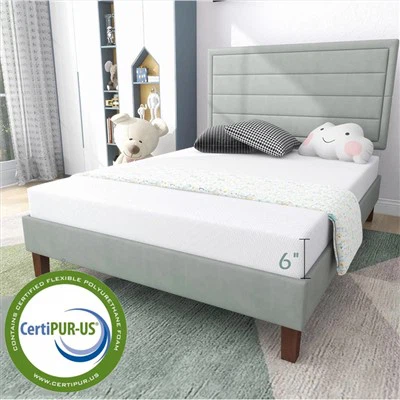

A mattress in its simplest form is a sleeping system with different parts which work together to do two main things. These are to provide you with comfort and provide you with support in all your different sleeping positions.
Types of Mattresses
Innerspring Mattresses
The most traditional type of mattress, the spring mattress is made up of a layer of coils surrounded by layers of comfort material that can consist of materials like latex, natural fibers, or foam. Different types of spring mattresses use different coil types and layouts to achieve different effects.
Advantages
- Offer solid back support
- Available in a wide range of firmnesses
- Budget-friendly options available
Disadvantages
- Can wear out more quickly than foam
- Older springs can become noisy
- Offer less pressure relief on joints
Foam Mattresses
Foam mattresses rely on different combinations of different-density foams to provide softness and support. Though memory foam is the most well-known type of foam mattress, there are several different types that provide different benefits.
Advantages
- Softer on side sleepers and those with joint pain
- Absorbs motion of restless sleepers
- Lack of springs eliminates noise
- More durable than spring mattresses long-term
Disadvantages
- Certain foams trap body heat
- Softness can cause “sinking” feeling
- Insufficient support for certain types of sleeper
- More expensive than spring mattresses
Hybrid Mattresses
Some mattresses offer a hybrid composition that includes layers of both springs and foam. Hybrid mattresses can be a great option for those whose preferences fall in the middle of what spring and foam mattresses can offer.
Advantages
- Softer than springs without the “sinking” feeling of foam
- Offers pressure point relief without compromising on back support
- Typically quieter than spring mattress alternatives
- Regulates temperature better than pure foam mattresses
- Can work for couples with different firmness preferences
Disadvantages
- Higher-quality hybrid mattresses can be expensive
- Doesn’t absorb motion as well as foam
It Provides Superior Spinal Support
One of the most significant benefits of sleeping on a firmer mattress is the superb spine support it gives. Which aids in the alignment of your spine as you sleep. The cervical (neck), thoracic (upper back), and lumbar (lower back) sections of your spine have a natural curvature. The firm sleep surface supports these natural contours by offering an even and continuous surface. It keeps your back in normal alignment, lowering your chances of waking up with back pain.
It Eases Pressure Points
It uniformly distributes your body weight, relieving pressure on your hips and shoulders and reducing the possibility of pressure points forming along your spine. Pressure points arise when your body sinks too deeply into a bed surface, causing some parts to bear extra weight, such as the shoulders and hips. This might cause discomfort and even agony over time. The mattress's exceptional spinal support effectively distributes your body weight, lowering the possibility of pressure spots. This means you can say goodbye to those annoying pressure points that cause discomfort.
Help Reduce Chronic Back Pain
Offering superior support to the natural curvature of the spine, it aids in the maintenance of healthy spinal alignment while sleeping. This can help to relieve back pain and tension. This is especially good for people who are on the heavier side. Firmer beds are more comfortable for heavier people because they provide appropriate support and avoid excessive sinking.
Enhance Your Body and Spinal Posture
Sleeping on a firmer bed that provides excellent spinal support on a regular basis can help with long-term spinal health. It lowers the chances of having chronic back problems, postural disorders, and spinal misalignments, all of which can lead to more significant health issues. A firmer bed promotes proper posture during sleep. It keeps your body from sinking into uncomfortable positions, which can contribute to long-term posture problems.
Offers Long-Lasting Durability
It can maintain its structure and shape since it has less give and sinking. This, in addition to improving support, serves to prolong wear and tear, hence extending the mattress’ longevity. You'll enjoy a comfortable and supportive sleep for years to come.
It Doesn’t Sag Prematurely or Early
Firm mattresses are less prone to sagging or developing indentations over time. When a mattress sags, it can no longer provide the necessary support for your spine. But a firm mattress’s robust nature ensures that it maintains its integrity and continues to support your back effectively.
Reduce Allergen Accumulation
Firm mattresses typically have closed-cell construction and, hence have fewer nooks and crannies for dust mites and allergens to hide. This can be a game-changer for allergy sufferers.
Help Reduce Toss and Turn
By preventing sinking, a firm surface allows you to move freely on the bed surface. This helps to keep you from tossing and turning during the night. When sleeping on a soft bed, you may experience sinking and difficulty switching positions, as well as pressure points and soreness. Firm mattresses, on the other hand, allow you to sleep on top of the bed rather than sinking into it.
Offer Less Disturbances
If you share your bed, firmer mattresses can help reduce motion transfer by reducing tossing and turning. You won't be disturbed by your partner's movements, ensuring a more restful night's sleep. However, it is also important to understand that it depends on what type of foam and innerspring are used to make it. For example, pocket spring mattresses will offer better motion prevention than Bonnell spring mattresses.
Easier to Get in and out
Firm mattresses are firm from the edges to the core, as opposed to soft beds, which sink in. This makes getting into and out of bed much easier. It provides a stable surface that makes mobility easy, especially for the elderly.
Signs of a Bad Mattress
A mattress is designed to offer you a supportive sleep surface. A bad mattress is unable to provide adequate support. Old, defective, or low-quality mattresses can cause discomfort and leave sleepers feeling unrested.
Signs from the Mattress
- Sagging or Squeaking
When you sleep on your mattress nightly, your body weight creates indentions on its surface. Once the mattress begins sagging, it’s unable to provide you with even support or proper spinal alignment. Similarly, a squeaking innerspring mattress is a sign of worn out springs and that the mattress can no longer support you. Additionally, sleeping on a sagging or squeaking mattress can lead to pressure buildup and pain.
- Improper Support
If you feel unsupported by your mattress, it may be due to one or more of the mattress’ layers not providing adequate support. Most modern mattresses contain multiple layers designed to support you and keep you comfortable while you sleep. If you wake up in the morning feeling sore, it might be because the mattress structure is worn out.
- Dust Mites or Mold
Dust, dust mites, and allergens can build up on mattresses overtime. Allergens like mold and mildew also collect on old mattresses with little airflow. The older a mattress is, the more likely it is to have a greater accumulation of irritants, which can lead to poor sleep quality.
- Age and Lifespan
The average lifespan of a mattress is between 7 and 10 years. Proper mattress care and maintenance can extend a mattress’ lifespan, though every mattress needs to be replaced eventually.
Effects on Your Body
A bad mattress can have negative effects on your body. If you’re experiencing the following signs, your mattress may be the reason.
- Waking up with Aches and Pains
Frequently waking up with aches and pains may be a sign of an unsupportive mattress. Your mattress’ comfort layers should conform to your body to keep your spine aligned while you sleep. Beneath those, the support core should provide a stable sleep surface. Without this support, you can experience stiff, achy joints upon waking each day.
- Frequent Sleep Disruptions
If you have difficulty finding a comfortable position on your mattress, you may toss and turn frequently throughout the night. Waking up to reposition yourself prevents you from getting adequate sleep. Additionally, older mattresses that sag can lead to excessive heat retention, which can cause sleepers to overheat and wake up throughout the night.
- Allergy Irritations
Sneezing, coughing, and itchy eyes are common symptoms of allergen exposure. When your mattress collects excessive buildup of irritants like dust, mildew, or mold, you’re more likely to experience these effects. While the use of a mattress protector and frequent cleaning can help prevent allergen buildup, you should replace your mattress if you notice your allergy symptoms worsening.
- Sleeping Better on Other Beds
You may find yourself feeling more refreshed after a night away from home, such as in a family’s guest bed or during a hotel stay. If you sleep better on other beds, it’s a sign that your mattress is not providing you the adequate comfort and support you need.
Steps to Clean Your Mattresses



Strip the Bed and Wash All the Bedding
Remove sheets, pillowcases, and mattress covers and let them take a spin in the washing machine while you work on cleaning the mattress. Washing all the bedding in hot water will help get rid of any dust mites. Depending on the type of pillows you have, you may be able to wash them as well (If you're not sure, make sure to double-check the care label and study up on how to wash pillows.)
Vacuum the Mattress
Grab your vacuum cleaner's upholstery attachment and go over the entire surface of the mattress, including the sides. Pay special attention to seams and break out the crevice attachment to get any hidden dirt or dust.
Spot-Clean Your Mattress with a Stain Remover
Now it’s time to focus on getting stains out of the mattress, and that means spot-cleaning. Never soak your mattress or apply water or cleaning solution directly to it. Memory foam, for example, isn't supposed to get wet at all. For that reason, it's important to proceed with caution and operate on the principle that less is more. So, spot-cleaning with a stain remover it is. The stain remover you choose will depend on the type of stain and the type of mattress. For biological stains, reach for an enzyme cleaner. Spray the cleaner onto a clean white cloth, and then blot the stained area with the cloth. After that, you can apply cold water to a different clean cloth and continue blotting until the stain lifts. The goal here is to use as little product and moisture as possible. This method is ideal for blood, sweat, vomit, urine, and other related stains.
As an alternative to an enzyme-based cleaner, you can make your own DIY solution by mixing dish soap with water and applying just the resulting foam to the stain. You can also make a DIY solution of equal parts cold water and hydrogen peroxide.
Sprinkle Baking Soda All Over the Entire Mattress
If you can't put your mattress out in the sun and fresh air, baking soda is the next best thing. Sprinkle a layer over the entire top of the mattress and leave for several hours (or better yet, apply before an overnight trip). Baking soda will break down acid and absorb any remaining moisture or odor. The longer you can leave baking soda on the mattress, the better it will work! As the mattress sits with the baking soda, open any windows in the room to let the light and sunshine in. The sun's UV rays will actually help kill any mold or bacteria on the mattress.
Vacuum Again
Once the baking soda has worked its magic, thoroughly vacuum it up. (If you have a fabric headboard, now's a good time to vacuum that, as well! Might as well get a fresh start with everything bed-related.)
Flip the Mattress
Now that side one is spotless, flip the mattress and repeat steps 1-5 so both sides are equally fresh and clean. Flipping, of course, should be done at regular intervals, whether you're deep cleaning the mattress or not. The conventional wisdom has been that people should flip their mattress every three months, but that rule of thumb only applies to spring mattresses because they compress over time. As mattresses get more specialized, your best bet is to check with the model manufacturer. (As a general rule of thumb, mattresses should be flipped every three months—or more often if you start to notice any sagging. Consistent mattress flipping will help the mattress wear more evenly and last longer.)
Protect the Mattress
Now that you know how to clean a mattress, it's time to protect it. Once it's fully dry, cover your fresh mattress with a mattress protector, which will make cleaning easier in the future and protect from spills, dirt, and other unpleasantries (i.e. bed bugs).
Keep out Dust with a Fitted Sheet
Using fitted sheets that are regularly washed, and keeping the area around the mattress clean, should protect it from any dust. Wrapping mattresses and box springs in mattress encasements ensures that dust mites don’t take up residence - an especially good idea for those who suffer from allergies or asthma.
Factors to Consider Before Choosing a Mattress
Types of Mattresses
Memory foam and innerspring beds are the most popular types, but additional constructions are becoming more common to give shoppers a variety. Within each mattress type, you can still find a wide range of firmness levels and price points.
Mattress Firmness Levels
Mattresses are most commonly described as soft, medium, medium-firm or firm. Medium to medium-firm beds are the most popular because they suit a wide range of needs. When picking out your firmness level, it's important to take into account both your sleep position and body type.
Sleep Position
Side sleepers: This is the most commonly preferred position and the one that doctors typically recommend to avoid back pain. The best mattresses for side sleepers have soft to medium firmness levels because they help keep your spine aligned. If it's too firm, you may end up putting too much pressure on your hips and shoulders.
Stomach sleepers: A firmer mattress is more suitable for anyone who likes to sleep on their stomach: You don't want your pressure points to sink in too far in this position.
Back sleepers: Medium firmness is ideal in this case. If your mattress is too soft or too firm in this position, you risk not having proper alignment.
Combination sleepers: Also opt for medium firmness to best support your various positions if you move around at night.
Body Type
Heavier body weights: A firmer mattress is best for heavier bodies because more weight means more pressure on the bed. Too much pressure can cause the bed to sink in and jeopardize spine alignment, leading to back pain. Some top-performing mattress brands also make models designed specifically for people over 250 pounds.
Lightweight sleepers: Smaller frames are better suited with a softer mattress because they aren't putting as much pressure on the bed. If the bed is too firm, it won't sink in enough to relieve pressure on the joints.
Mattress Sizes
Check the mattress dimensions before you buy to ensure it'll properly fit into your room. Queen is the most popular mattress size, but King (which is equivalent to two Twins) is ideal for two sleepers if you have the space.
Mattress Cost
Pricing is mostly determined by the materials and layers in a mattress. A two-layer foam mattress is going to cost significantly less than a seven-layer hybrid, and an organic model is going to cost more than one made of polyurethane foam.
Ultimate FAQ Guide to Mattress
As one of the leading mattress manufacturers and suppliers in China, we warmly welcome you to wholesale mattress made in China here from our factory. All customized products are with high quality and competitive price. For free sample, contact us now.
crib mattress foam, baby mattress thickness, best baby mattress